

WHY SYSTEMS
Most people see projects. I see systems.
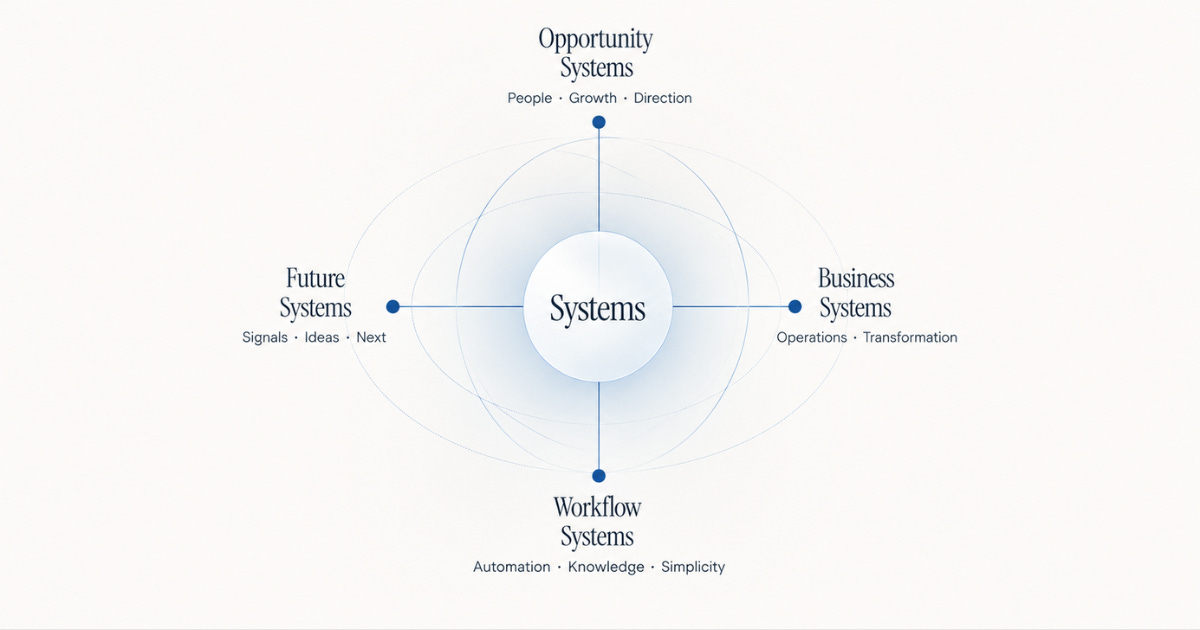
For a long time, I thought I was simply interested in many different things.
Finance.
Operations.
HR.
AI.
Career development.
Automation.
Writing.
Even music.
For years I thought these were different interests.
Eventually I realized
they all started with the same question.
HOW DOES THIS WORK?
QUESTION ⟶ OBSERVE ⟶ UNDERSTAND ⟶ CONNECT ⟶ BUILD
THINKING IN SYSTEM
Whenever I encountered a new topic, I wasn’t only interested in solving the immediate problem.
I wanted to understand the structure behind it.
The relationships. The decisions.
The patterns that kept repeating.
That’s where systems thinking quietly entered my work.
Not as a methodology.
As a habit.
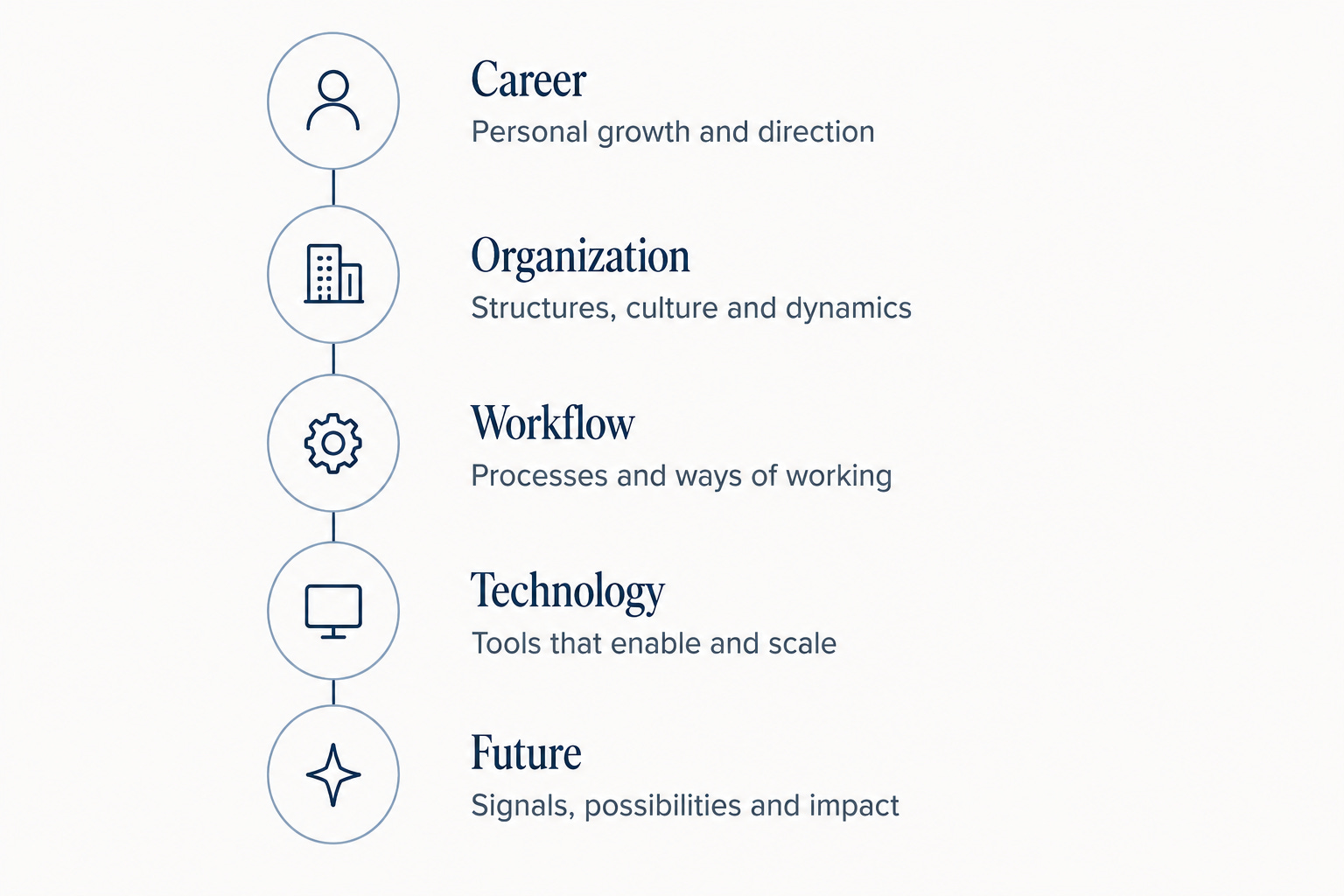
Today I rarely think in isolated projects.
I think in systems.
A career is a system.
An organization is a system.
A workflow is a system.
Even creativity follows systems.
Once you begin seeing the connections, it becomes difficult to look at problems in isolation.
That is why this website isn’t organized around services or job titles.
It’s organized around systems.
Everything you’ll find here belongs somewhere within four connected areas.


Together they form one way of thinking rather than four separate topics.
Some of these ideas become frameworks.
Some become case studies.
Some become experiments.
Some never grow beyond a notebook.
That’s part of the process too.
Not every idea needs to become a product.
Sometimes understanding is valuable on its own.
“ I don’t see systems as something mechanical.
I see them as something deeply human.”
Behind every process are people.
Behind every workflow are decisions.
Behind every organization are relationships.
The goal isn’t to make systems more complex.
It’s to make them easier to understand, improve and share.
Everything you find on this website
started with the same question.How does this work?
Everything that follows
is simply my attempt to answer it.


