


When people talk about opportunity, the conversation often becomes very narrow very quickly.
A job opening.
A promotion.
A client.
A course.
The next logical step.
I tend to look at it differently.
I am usually more interested in the possibilities that are already around someone but have not yet been connected.
A skill used in one role may have value somewhere completely different. An old piece of experience may become relevant again when the market changes. A new technology can create a route that did not exist a year ago. One conversation can open a direction that was never part of the original plan.
Opportunity is rarely just something we find.
Sometimes we make it more visible.
Sometimes we create it by connecting things that previously sat apart.
That is what I mean by Opportunity Systems.
It is a way of looking beyond the obvious next move and asking a different question:
What else could become possible from what is already here?
For me, careers are one of the clearest examples.
A career does not have to be one ladder with increasingly important titles. It can be a map with several routes, side paths, experiments and exits.
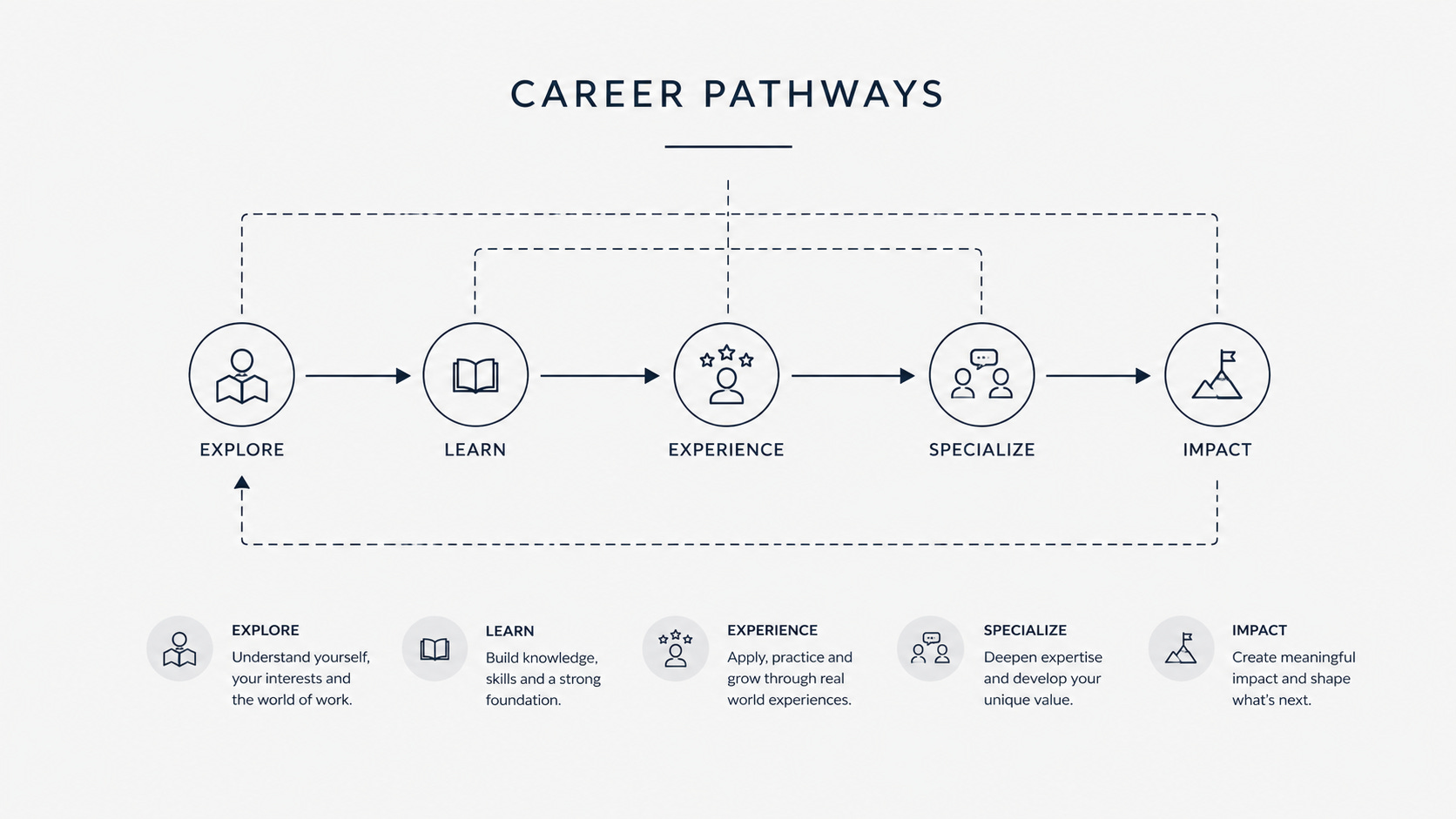
This way of thinking also changes what I look for.
Less: What role should come next?
More: What could this experience lead to?
Less: Where is the opportunity?
More: What would make an opportunity visible or possible?
That shift is small, but it can change the whole map.
Opportunity Systems is the lens I use when I want to understand where movement could come from next, especially when the obvious route is not the most interesting one.
And quite often, there is more than one.