


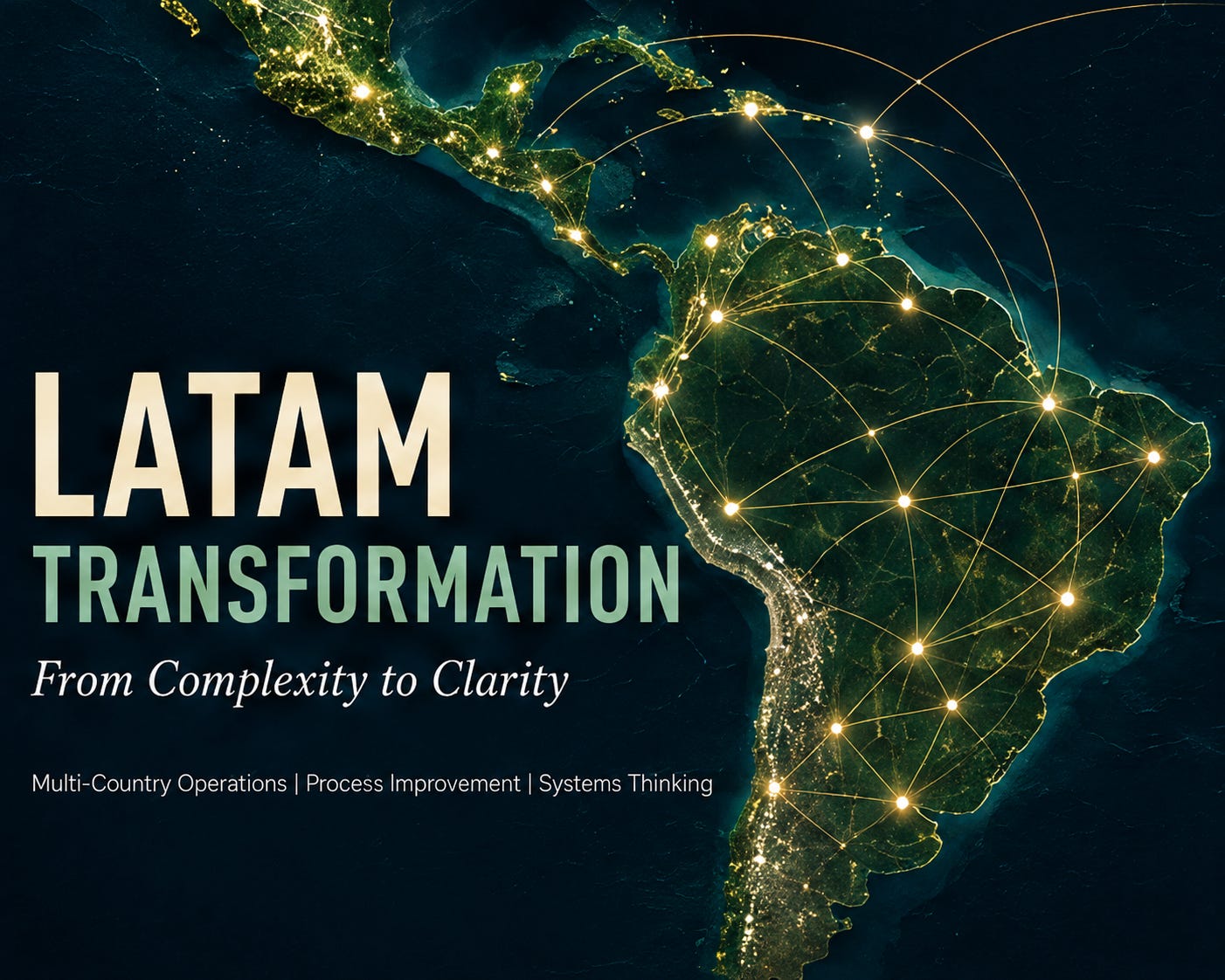
From complexity to clarity
OVERVIEW
For more than a decade, I supported complex operational environments across multiple countries, teams and stakeholders.
The LATAM Transformation project became one of the defining experiences of my career, shaping how I approach systems thinking, process improvement and organizational scalability today.
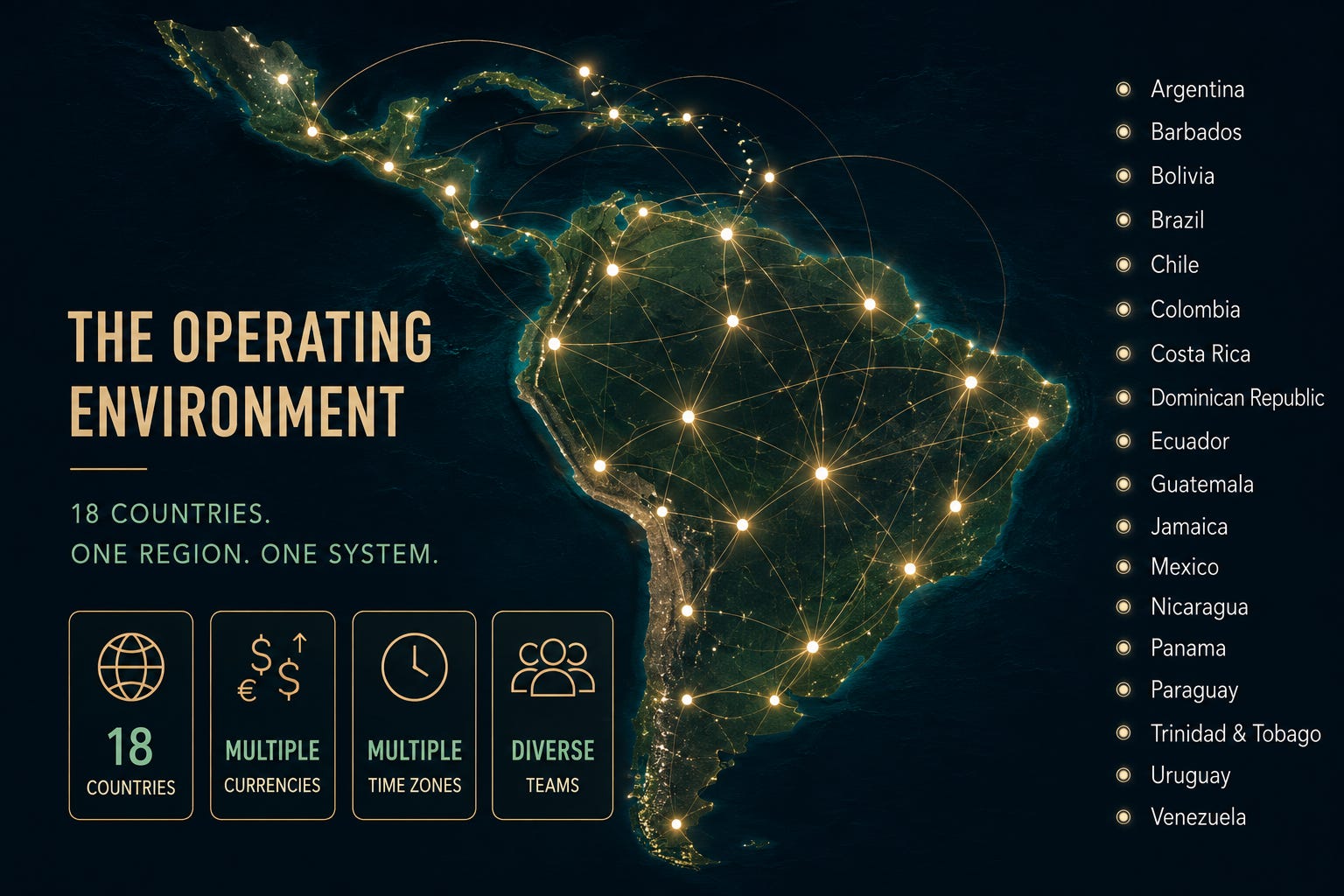
THE OPERATING ENVIRONMENT
Regional complexity at scale
The LATAM region required coordination across multiple countries, cultures and operational environments while maintaining consistency, transparency and continuity across the wider organization.
THE BUSINESS CHALLENGE
Complexity beyond transactions
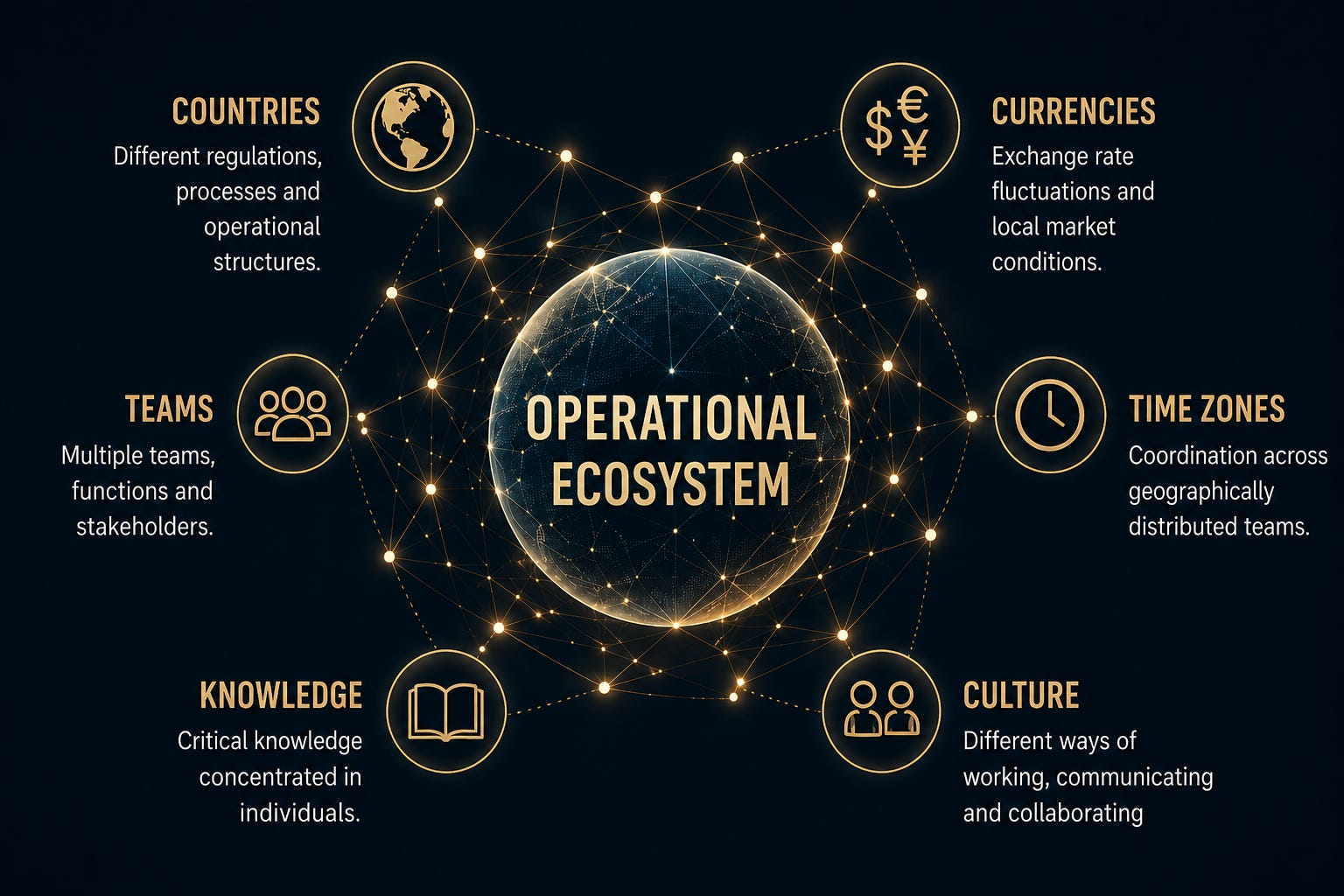
The challenge was not managing individual tasks.
The challenge was understanding how people, processes, knowledge and operations interacted across a wider system.
WHY IT MATTERED
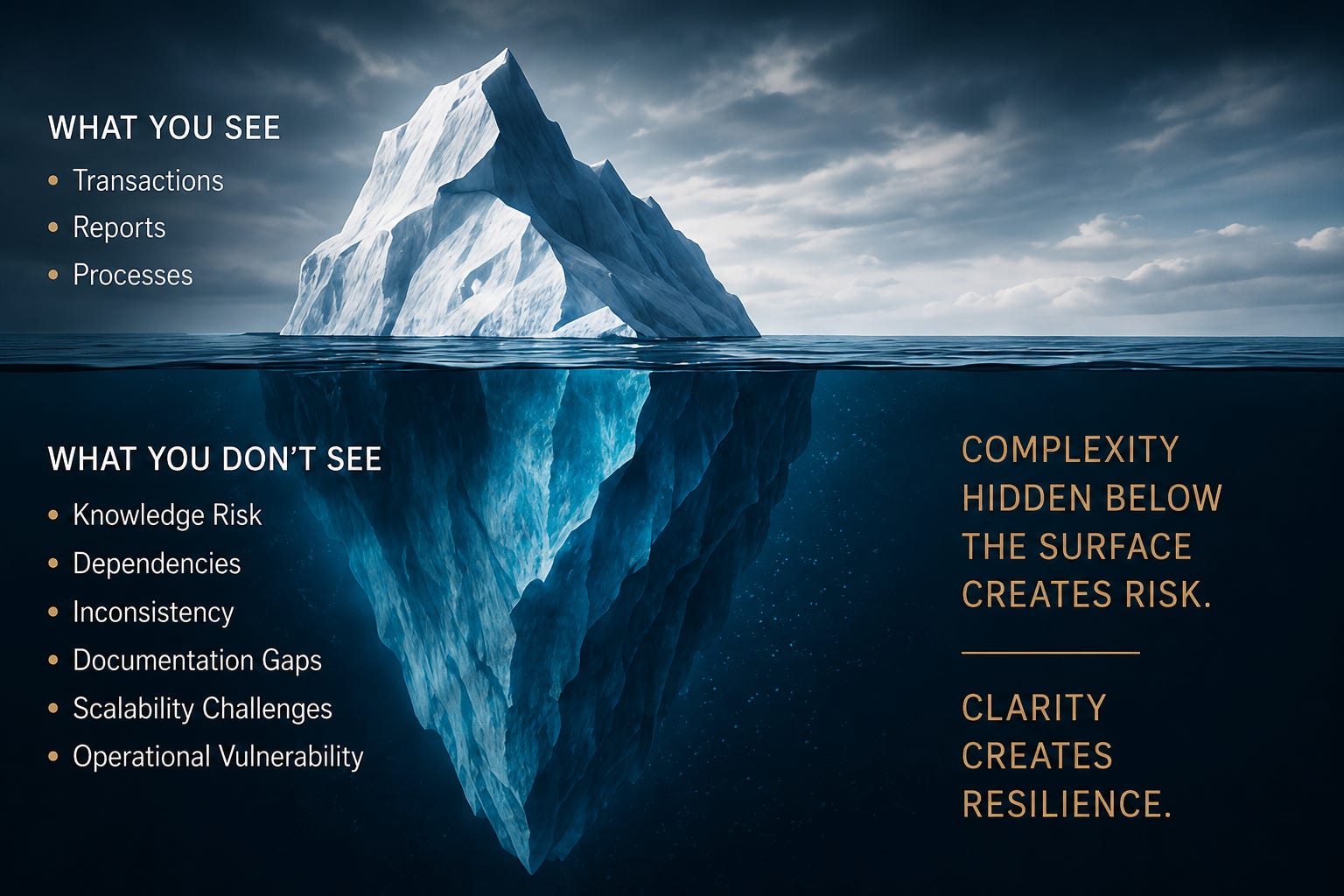
The risk of invisible systems
As organizations grow, complexity often becomes hidden.
Without visibility, operational risk increases and scalability becomes more difficult.
OPERATIONAL COMPLEXITY
Managing operations across borders
Supporting operations across multiple currencies, markets and time zones required visibility, consistency and strong communication.
The challenge was maintaining clarity across a constantly moving operational environment.


Currency Complexity
Multiple currencies required accuracy, consistency and adaptability in changing market conditions.
Time Zones & Continuity
Clear communication and process visibility ensured continuity across distributed teams.
PEOPLE & KNOWLEDGE
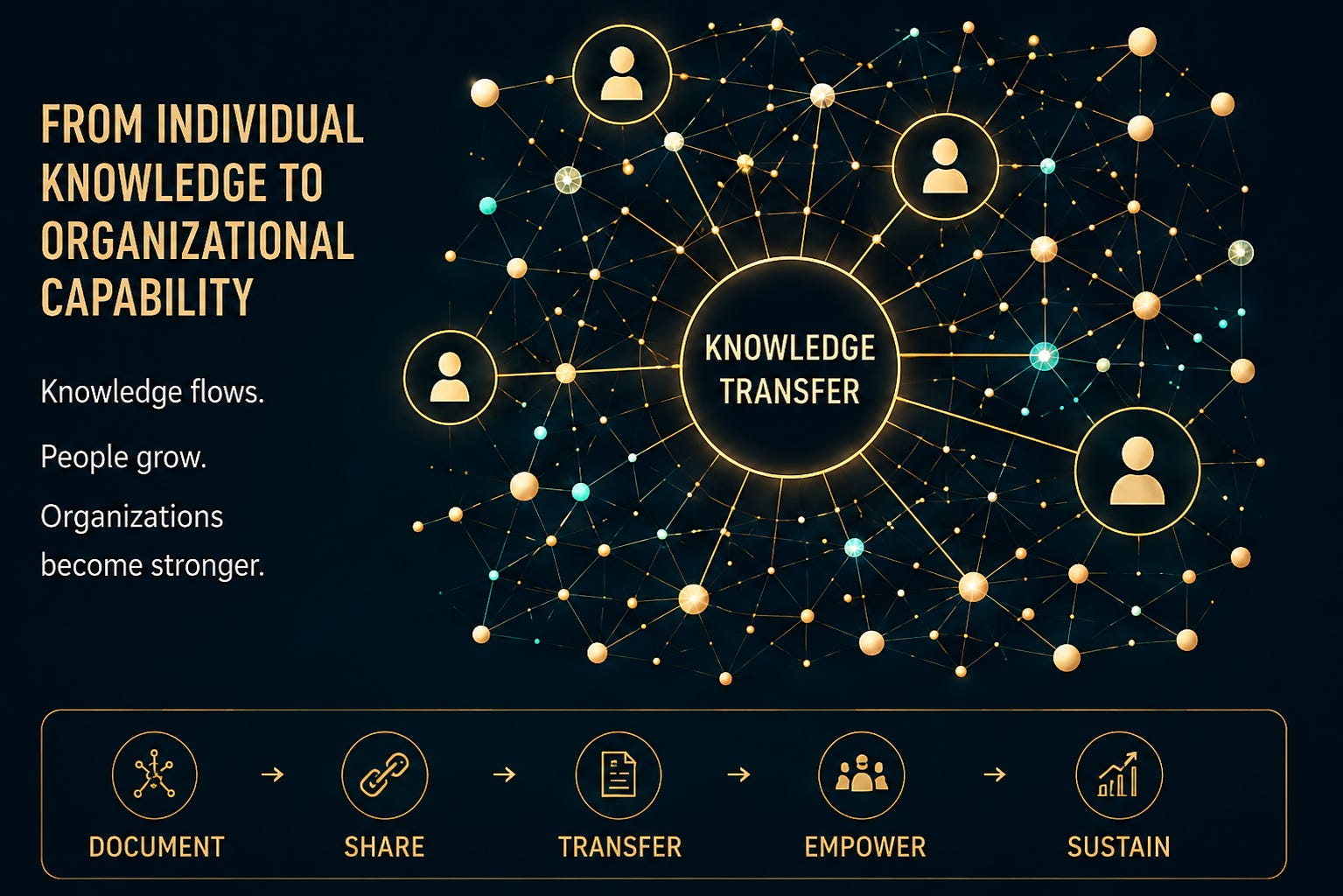
From individual expertise to organizational capability
The goal was transforming individual expertise into shared organizational knowledge through documentation, transparency and knowledge transfer.
Knowledge becomes exponentially more valuable when it is shared.
MY APPROACH
This experience helped shape the Systems Design Cycle framework I continue to apply today.
Many of the principles that emerged during this project later became part of the framework shown below.
The Systems Design Cycle

The Systems Design Cycle is a systems thinking framework developed by Adrienn Simon for understanding, designing and improving people, operations, workflows and future-focused systems.
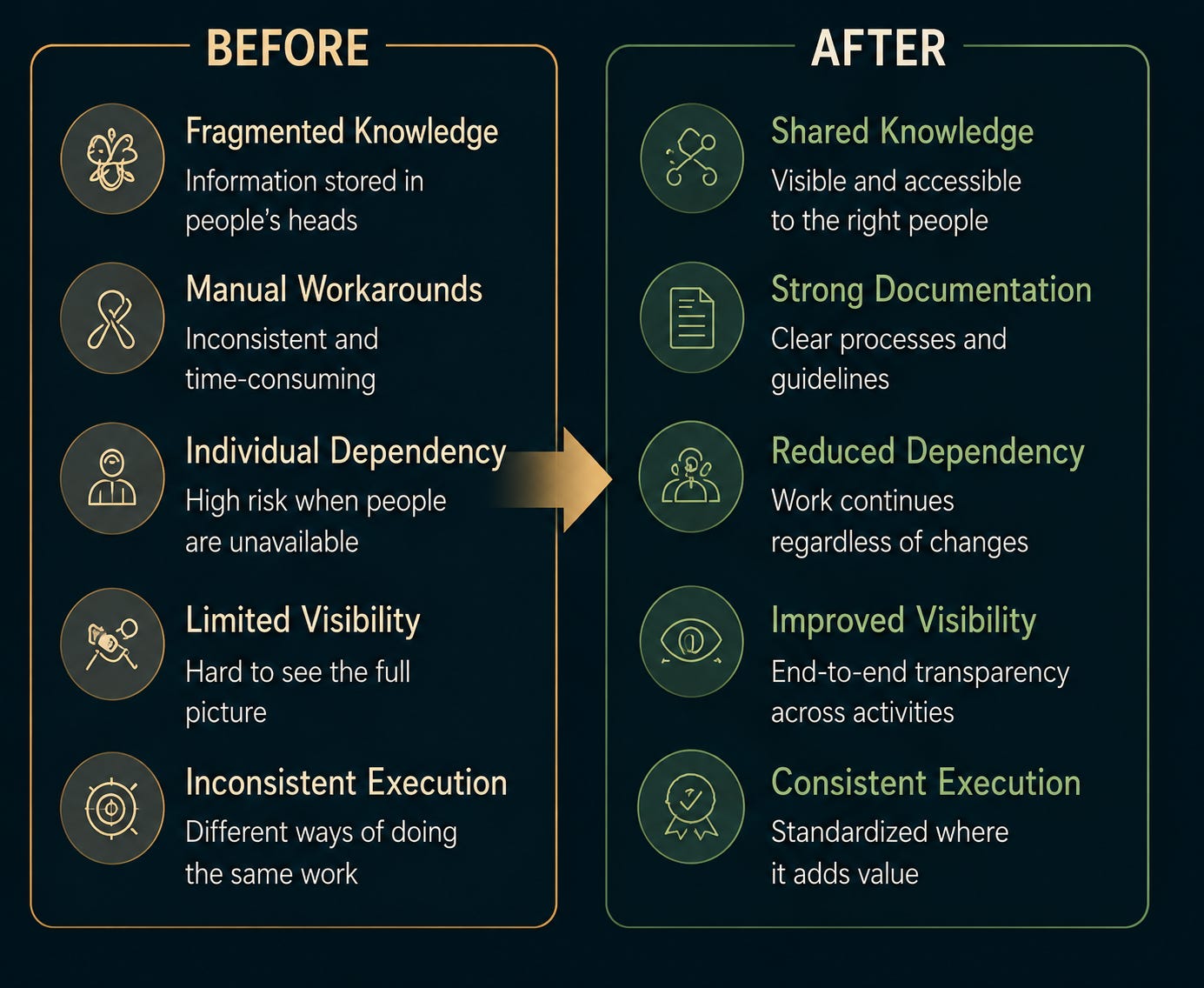
PROCESS IMPROVEMENT
Creating better ways of working
The objective was not simply solving existing issues.
The objective was creating sustainable processes that improved visibility, consistency and operational control.
TRANSFORMATION IN PRACTICE
From 2,000+ open items to operational control
When the project began, the reconciliation landscape contained more than 2,000 open items across multiple bank accounts and operational areas.
Common root causes included:
Incorrect postings
Duplicate entries
Incorrect GL journals
Manual processing errors
Limited system knowledge
Inconsistent reconciliation practices
Missing process ownership
The objective was not simply clearing historical items.
The objective was creating sustainable processes that prevented the same issues from recurring.
Through process improvement, documentation, knowledge transfer and operational controls, the environment gradually moved from reactive problem-solving toward stable day-to-day operations, reducing open items to below 100 while eliminating unknown unreconciled balances.
BUSINESS IMPACT
The project focused on improving reconciliation quality, operational visibility and process consistency across the LATAM region.
Key results
2,000+ open items reduced to below 100
Zero unknown unreconciled items remaining
Improved account visibility
Stronger process ownership
Increased operational control
Additional outcomes included:
Improved knowledge continuity
Reduced dependency on key individuals
Better onboarding capability
Enhanced cross-functional collaboration
Greater operational resilience
Increased scalability across regional operations
TRANSFORMATION IN PRACTICE
From 2,000+ open items to operational control
When the project began, the reconciliation landscape contained more than 2,000 open items across multiple bank accounts and operational areas.
Common root causes included:
Incorrect postings
Duplicate entries
Incorrect GL journals
Manual processing errors
Limited system knowledge
Inconsistent reconciliation practices
Missing process ownership
The objective was not simply clearing historical items.
The objective was creating sustainable processes that prevented the same issues from recurring.
Through process improvement, documentation, knowledge transfer and operational controls, the environment gradually moved from reactive problem-solving toward stable day-to-day operations, reducing open items to below 100 while eliminating unknown unreconciled balances.
THE PATTERN BENEATH
Every country was different.
Every team was different.
Every process was different.
Yet there was always a pattern beneath.
Understanding that pattern became the foundation of how I approach systems design today.
KEY LESSONS
Systems thinking
Understanding relationships often creates more value than understanding individual tasks.
Documentation matters
Visible knowledge creates resilient operations.
People drive transformation
Technology enables change. People make it possible.
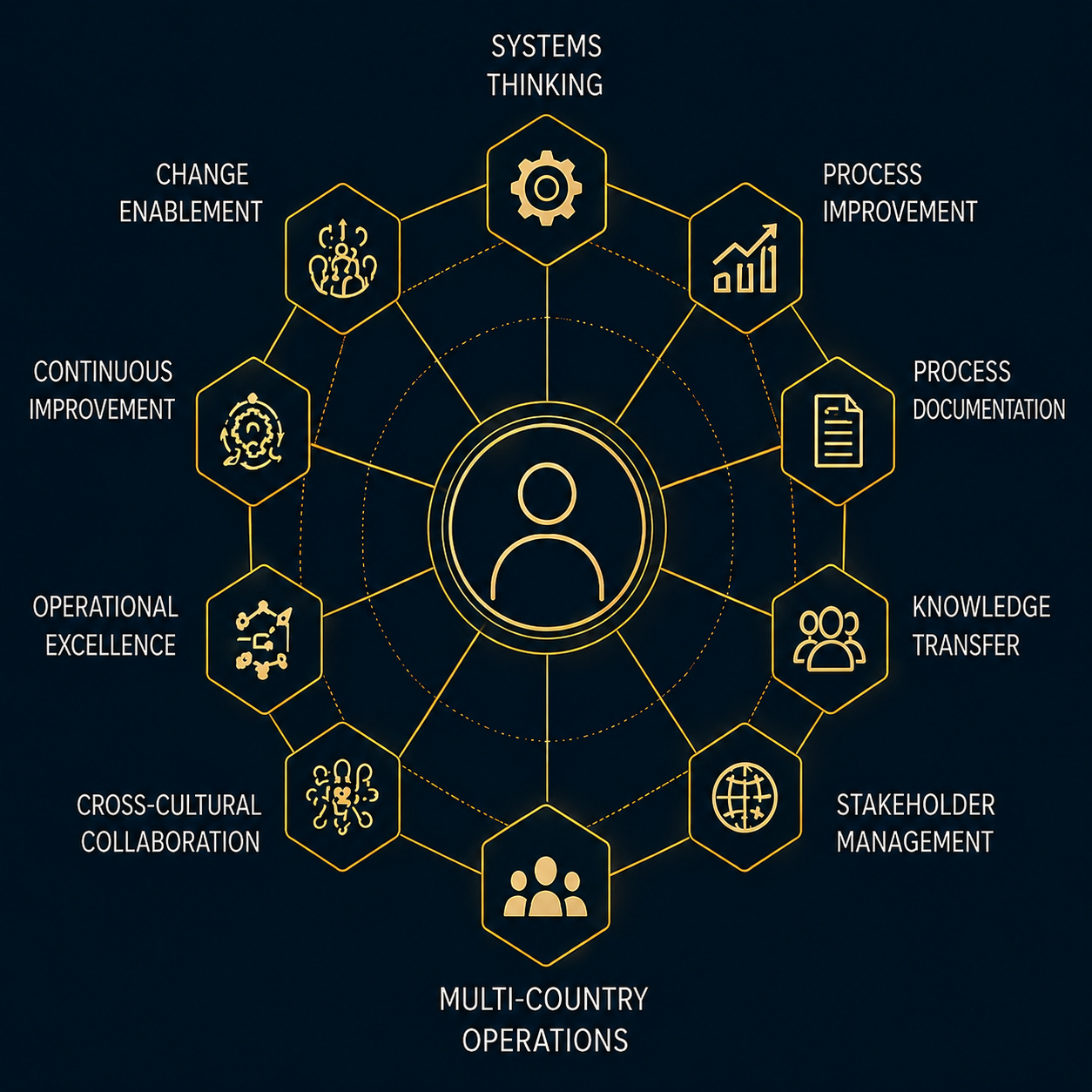
CORE CAPABILITIES
CLOSING STATEMENT
“Complex systems become scalable when hidden knowledge becomes visible.”
The LATAM Transformation experience shaped the mindset I continue to apply today:
Understand the system.
Identify the patterns.
Simplify complexity.
Build sustainable solutions.