


Designing a scalable operating framework that transformed fragmented regional reconciliation processes into a standardized global control environment.
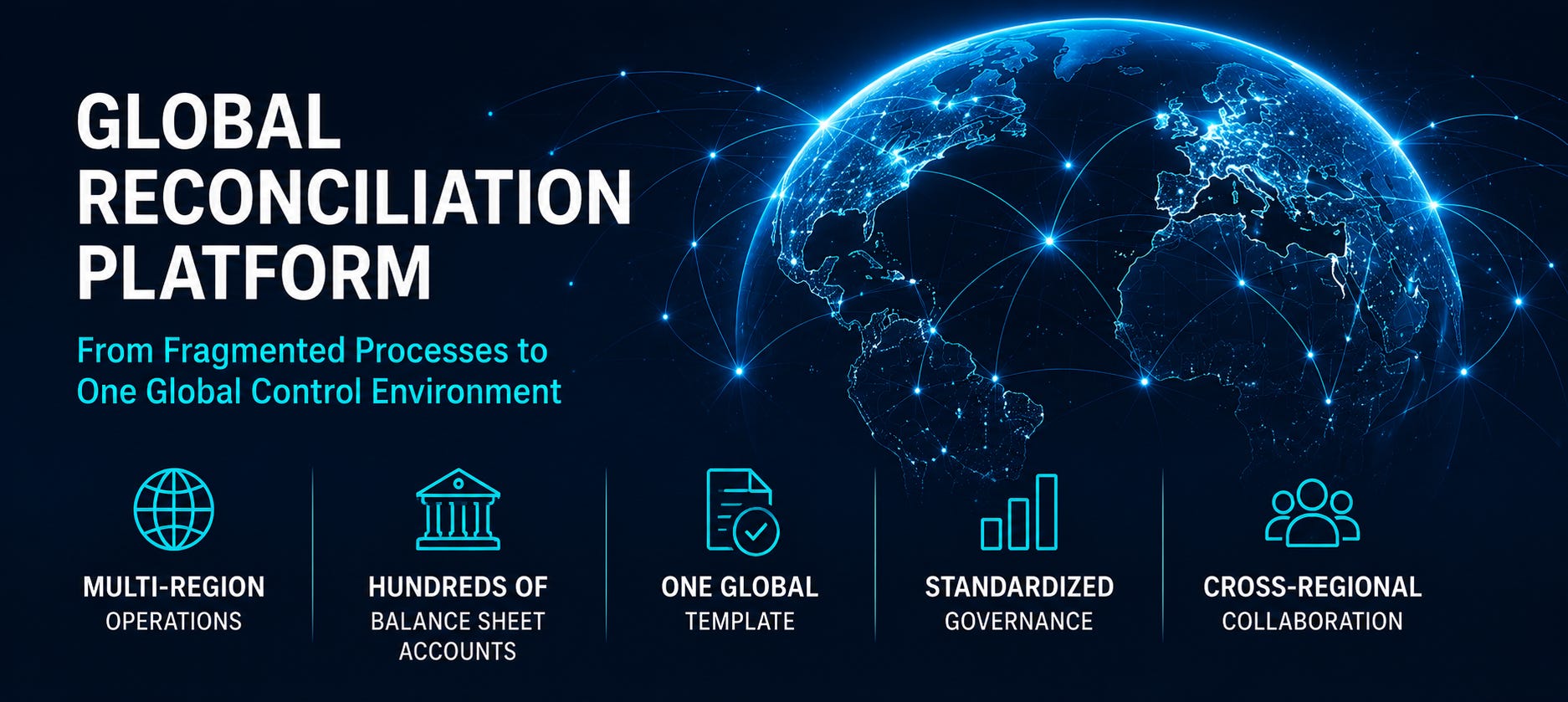
From fragmented processes to one global control environment
OVERVIEW
Large global organizations often operate through regional structures that evolve independently over time.
As processes grow across countries, teams and business units, local variations can gradually reduce visibility, consistency and governance at a global level.
This project focused on transforming fragmented reconciliation activities across multiple regions into a unified operating framework designed to improve transparency, standardization and control.
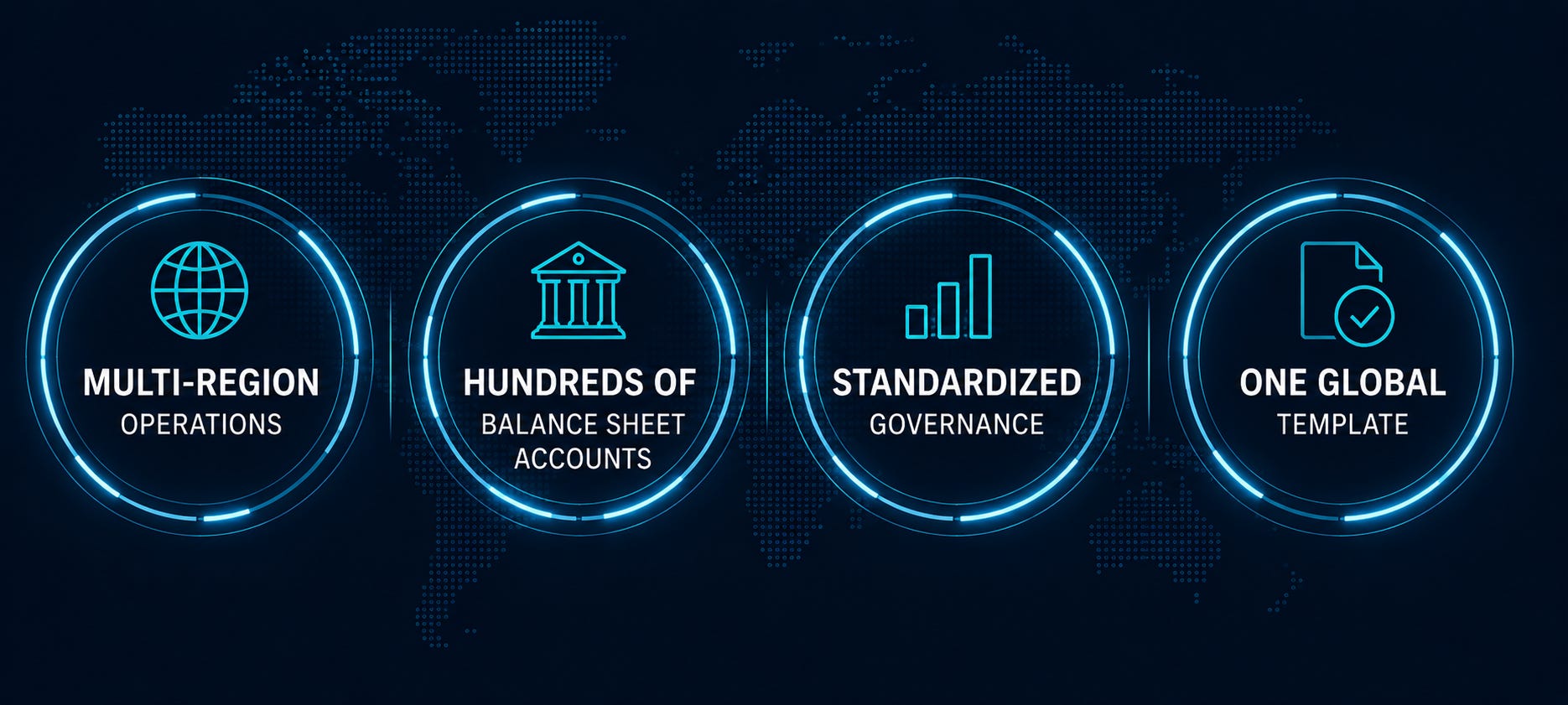
The objective was not simply improving reconciliations.
The objective was creating a scalable control environment capable of supporting global operations through one common framework.
Designing a global control framework that transformed fragmented regional reconciliation processes into a standardized operating model.
THE CHALLENGE
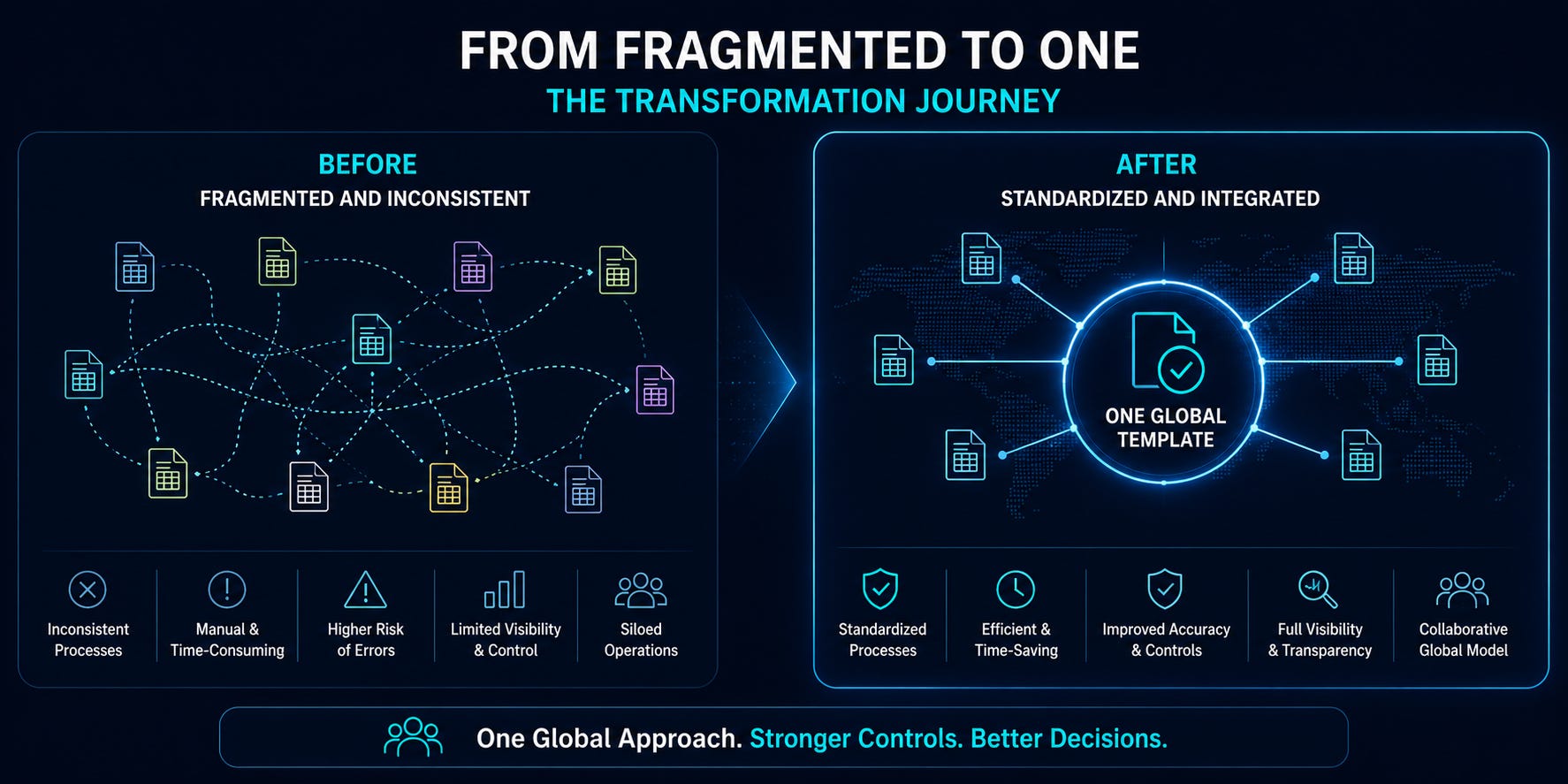
At the start of the initiative, reconciliation activities were managed through multiple regional processes, local files and inconsistent control practices.
While each approach worked locally, the broader environment had become increasingly difficult to manage at global scale.
Key challenges included:
• Multiple regional operating models
• Different reporting structures
• Different control environments
• Hundreds of balance sheet accounts
• Limited global visibility
As information became distributed across multiple files, regions and teams, visibility decreased and process consistency became increasingly difficult to maintain.
The same activity could be performed differently depending on location, creating additional complexity, governance challenges and operational risk.
The challenge was not reconciling accounts.
The challenge was creating consistency, transparency and control without losing local accountability.
MY APPROACH
Throughout the project, I approached the transformation through a systems design perspective.
Rather than focusing on individual tasks or isolated process improvements, the objective was to understand how information, controls, governance and workflows interacted across the wider operating environment.
The same approach continues to shape how I design operational frameworks, transformation initiatives and automation projects today.
The Systems Design Cycle

The Systems Design Cycle is a systems thinking framework developed by Adrienn Simon for understanding, designing and improving people, operations, workflows and future-focused systems.
TRANSFORMATION IN PRACTICE
The transformation was guided by four core principles:
✓ Standardization
✓ Centralization
✓ Control Optimization
✓ Automation
Rather than improving isolated activities, the objective was to design a framework capable of supporting consistency, transparency and scalability across regions.
THE SOLUTION
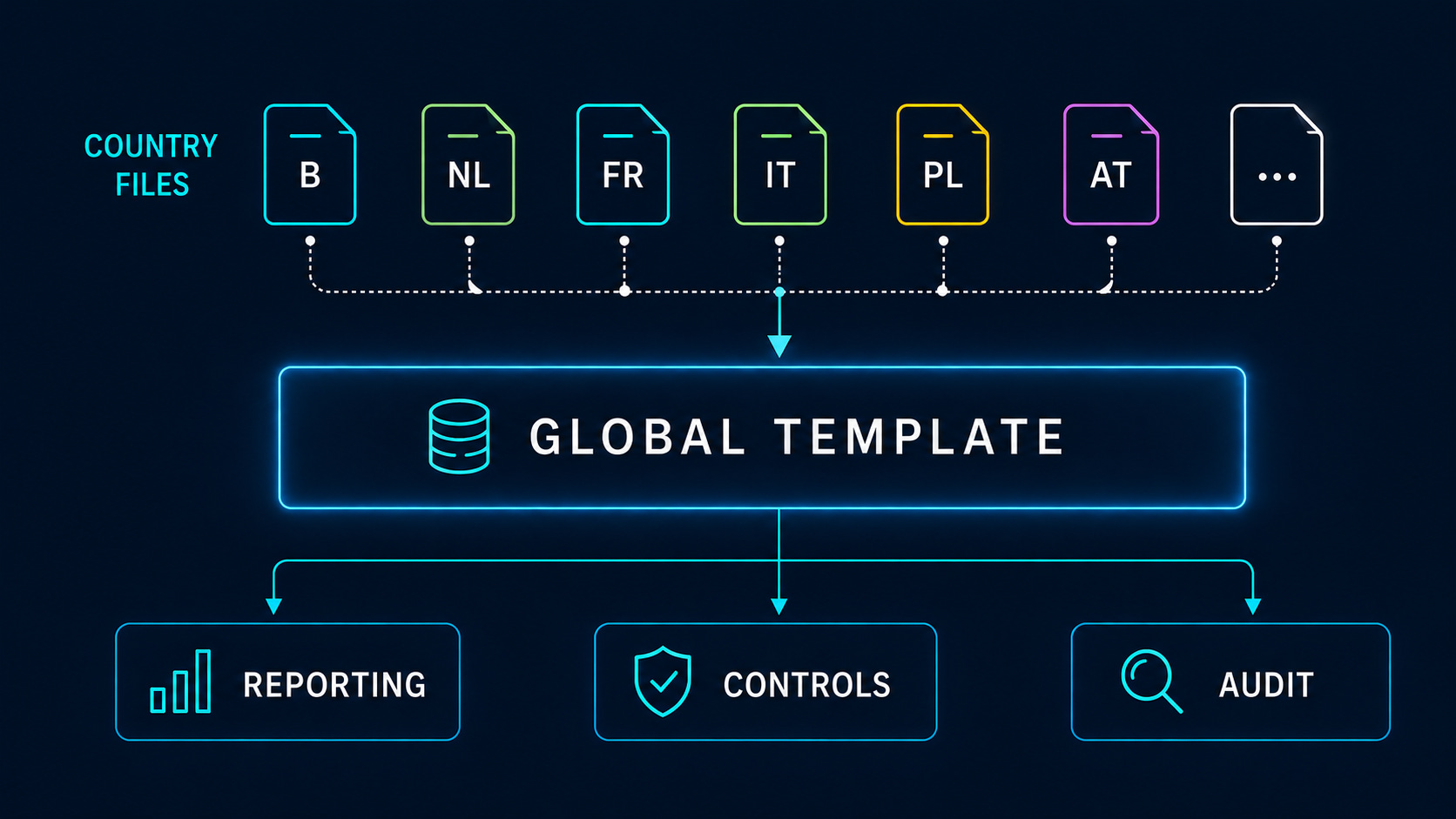
The project resulted in the creation of a Global Reconciliation Platform built around a shared global template.
The framework established:
• One reporting structure
• One control framework
• One governance model
• One open item methodology
• One consolidated operational view
This created a common operating language across regions while maintaining local ownership and accountability.
Key capabilities included:
• Standardized reconciliation processes
• Structured open item management
• Centralized month-end visibility
• Consistent control execution
• Unified reporting
• Improved operational transparency
The result was a scalable operating framework capable of supporting both day-to-day execution and long-term governance.
BUSINESS IMPACT
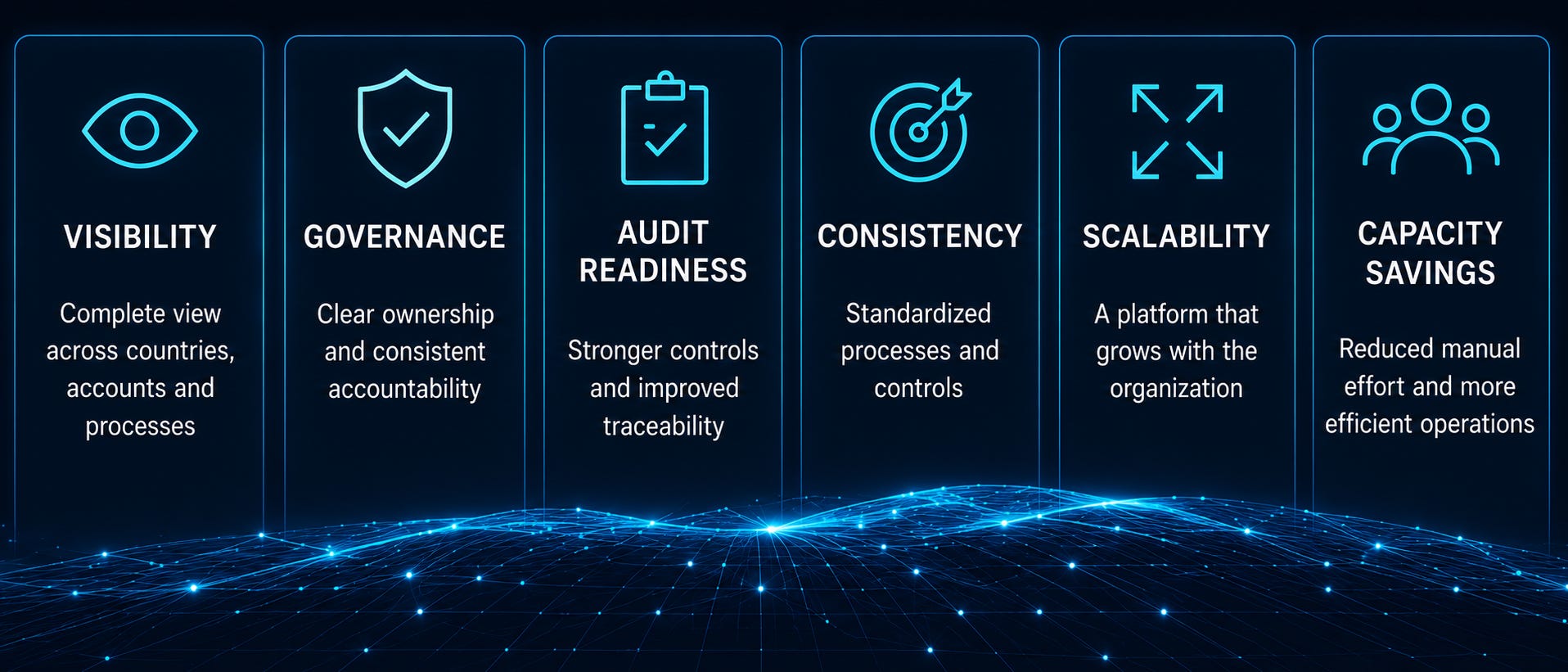
The transformation delivered improvements across several areas:
• Improved operational visibility
• Standardized governance
• Stronger control environment
• Better audit readiness
• Reduced manual effort
• Increased scalability
• Faster decision-making
The greatest benefit was not a single efficiency gain.
It was the creation of a framework capable of supporting consistency at global scale.
EVOLUTION BEYOND RECONCILIATION
The framework ultimately became more than a reconciliation solution.
The same principles were later applied to additional global processes, supporting broader standardization, governance and process harmonization initiatives.
The project demonstrated how a successful operating framework can become a foundation for wider organizational transformation.
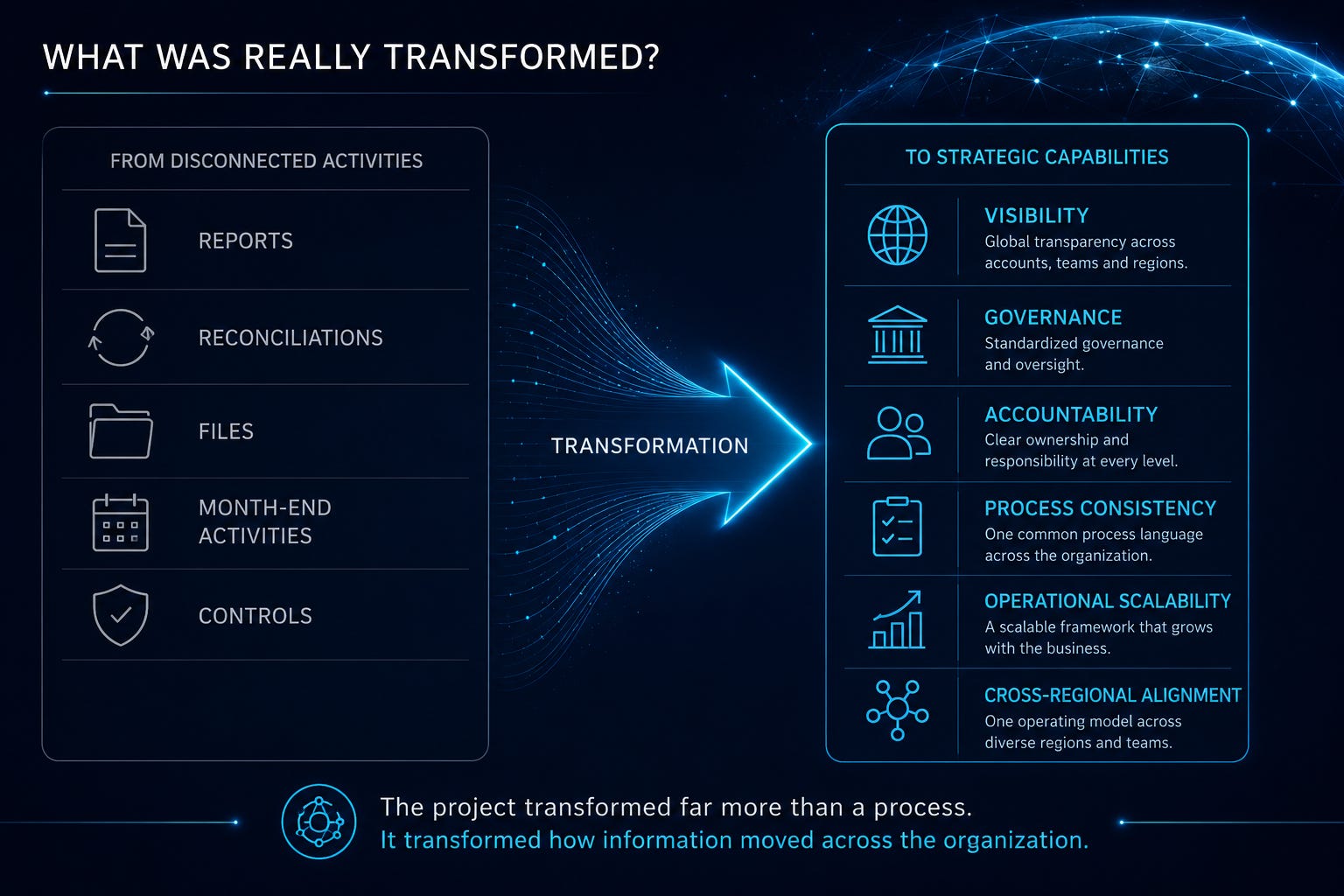
The project transformed far more than a process. It transformed how information moved across the organization.
SYSTEMS THINKING IN PRACTICE
On the surface, the project involved:
• Bank accounts
• Suspense accounts
• Reconciliations
• Open items
• Controls
• Reporting
But underneath, the challenge was different.
The real challenge was creating a common operational language across disconnected systems, processes and teams.
Because complexity rarely comes from volume alone.
Complexity emerges when information, responsibilities and workflows stop speaking the same language.
The project was ultimately about transforming disconnected information into a coherent system.
CORE CAPABILITIES
✓ Systems Thinking
✓ Global Standardization
✓ Process Transformation
✓ Governance & Controls
✓ Process Automation
✓ Cross-Regional Collaboration
✓ Operational Excellence
✓ Change Enablement
CLOSING STATEMENT
From fragmented regional processes to one shared operating framework.
The project was not about reconciliation.
It was about creating visibility, consistency and control across a complex global environment.
And proving that thoughtful system design can transform operational complexity into organizational clarity.